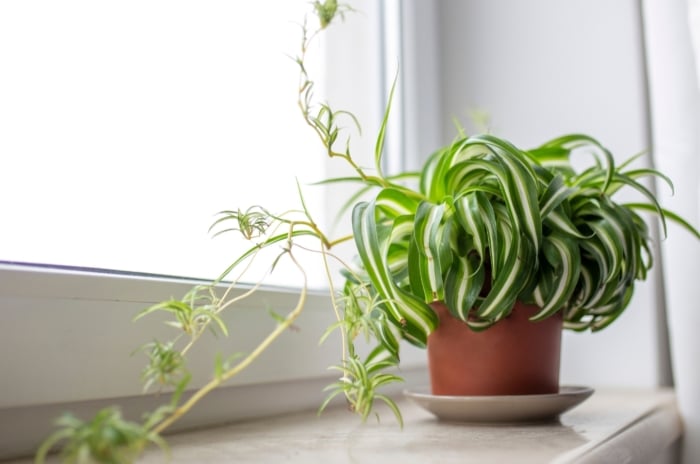
Why Your Spider Plant Has Brown Tips (and How to Fix it)
If you're dealing with brown tips on your spider plant, there are a few likely causes. Luckily, most are easily fixable with a change in care. In this guide by Epic Gardening founder Kevin Espiritu, learn what they are and how to avoid them.

Contents
If you are a gardener, you have probably experienced this houseplant heartbreak. You bring home a new spider plant, pot it up, and before long, the tips of the leaves turn brown or black. I have been through it with my own spider plant as well.
Leaf tips often start browning because of a few common issues, usually tied to moisture, stress, or too much sunlight. The good news is that all of these problems are easy to correct.
Here is what you can do to prevent brown tips and stop your spider plant from turning brown.
Causes of Brown Tips on Spider Plants

Chlorophytum comosum is a popular indoor plant because it thrives in less-than-ideal conditions, including indirect light. It will even produce spiderlings and flowers with little effort. Still, it is common for the leaves to look dead, black, crispy, or brown.
Here are a few reasons your leaves may be turning brown and how to prevent it. To get rid of brown leaf tips on your spider plant, follow these easy steps:
- Consistent watering. Water only when the soil is almost dry.
- Bright indirect sunlight if growing indoors. Partial to shaded light if growing outdoors.
- Feed with weak water-soluble fertilizer. In the event of salt buildup, thoroughly flush the soil with water.
- Water it with fluoride-free water.
- Monitor humidity levels.
Check out our full guide on the spider plant if you’re wondering about spider plant care.
Stress from Overwatering or Underwatering

Water stress is one of the most common causes of brown leaf tips on spider plants, and it can result from both overwatering and underwatering.
With overwatering, excess moisture leads to root rot, which blocks the movement of water and nutrients through the plant. This results in brown leaf tips and, if not addressed, can eventually kill the plant.
With underwatering, the leaves gradually dry out. Chlorophytum comosum prefers soil that dries out slightly between waterings but does not become bone dry. When moisture levels drop too low, the leaves turn brown.
If your plant is underwatered, check the potting mix and moisture level, then begin watering more regularly. For overwatered plants where root rot has set in, remove any rotted roots or damaged sections to give the plant a chance to recover.
If you are wondering how often to water a spider plant, simply press your index finger into the soil. If the top two inches are dry, it is time to water.
Repot overwatered plants into fresh potting mix. To prevent future issues, use well-draining soil and a container with proper drainage. Always empty the saucer after watering so the soil does not absorb excess moisture.
Tap Water Usage

Over time, fluoride can become toxic to spider plants. Many tap water supplies are fluoridated to help prevent tooth decay, and spider plants often develop brown leaf tips when exposed to fluoride-laden water.
Fluoride builds up in the potting mix and eventually harms the plant by disrupting photosynthesis and damaging leaf tissue. It often shows up as browning along the leaf edges or brown tips on spider plants. If your tap water contains fluoride, switch to distilled water, filtered water, or collected rainwater.
If you suspect fluoride toxicity, flush the soil regularly with distilled water. Slowly pour several containers of distilled water through the pot and allow it to drain completely. Repeat this process once more to wash out as much fluoride as possible.
Rainwater is especially effective for flushing minerals from the soil. Using a potting mix with higher calcium levels can also help reduce the risk of fluoride toxicity and prevent future brown tips.
Overfertilizing

Salt buildup from overfertilizing is another common cause of brown leaf tips on spider plants. Too much fertilizer can create toxicity in the soil and damage the roots, which eventually leads to browning at the tips.
A quick solution is to repot the plant in fresh soil. You can also pause fertilizing and flush the existing soil with water to wash away accumulated salts and restore balance.
Spider plants only need fertilizing once every three months during the growing season. Use a diluted, balanced, water-soluble fertilizer and avoid applying more than the plant needs.
Too Much Sun Exposure

Spider plants grown outdoors prefer shady spots with evenly moist soil. They do not tolerate scorching sun, which overheats the plant and dries the soil completely. Place outdoor spider plants in a shaded area with moderate light to keep the foliage healthy.
Indoor spider plants should be kept in bright, indirect, or filtered light. Under these conditions, they grow well without developing brown tips. Too much direct sun will scorch the leaves, harm young spiderlings, and lead to browning. Keep the mother plant in gentle light to ensure the pups stay healthy, too.
Low Humidity Levels

Spider plants need relatively high humidity to thrive. When humidity is too low, especially indoors, the leaves dry out and brown tips begin to form. During winter, keep your spider plant in a room with higher humidity to prevent this.
In summer, you can raise humidity by watering consistently, grouping your plant with other houseplants, or placing it on a humidity tray. These simple steps will help keep your spider plant healthy and vibrant.
Diseases

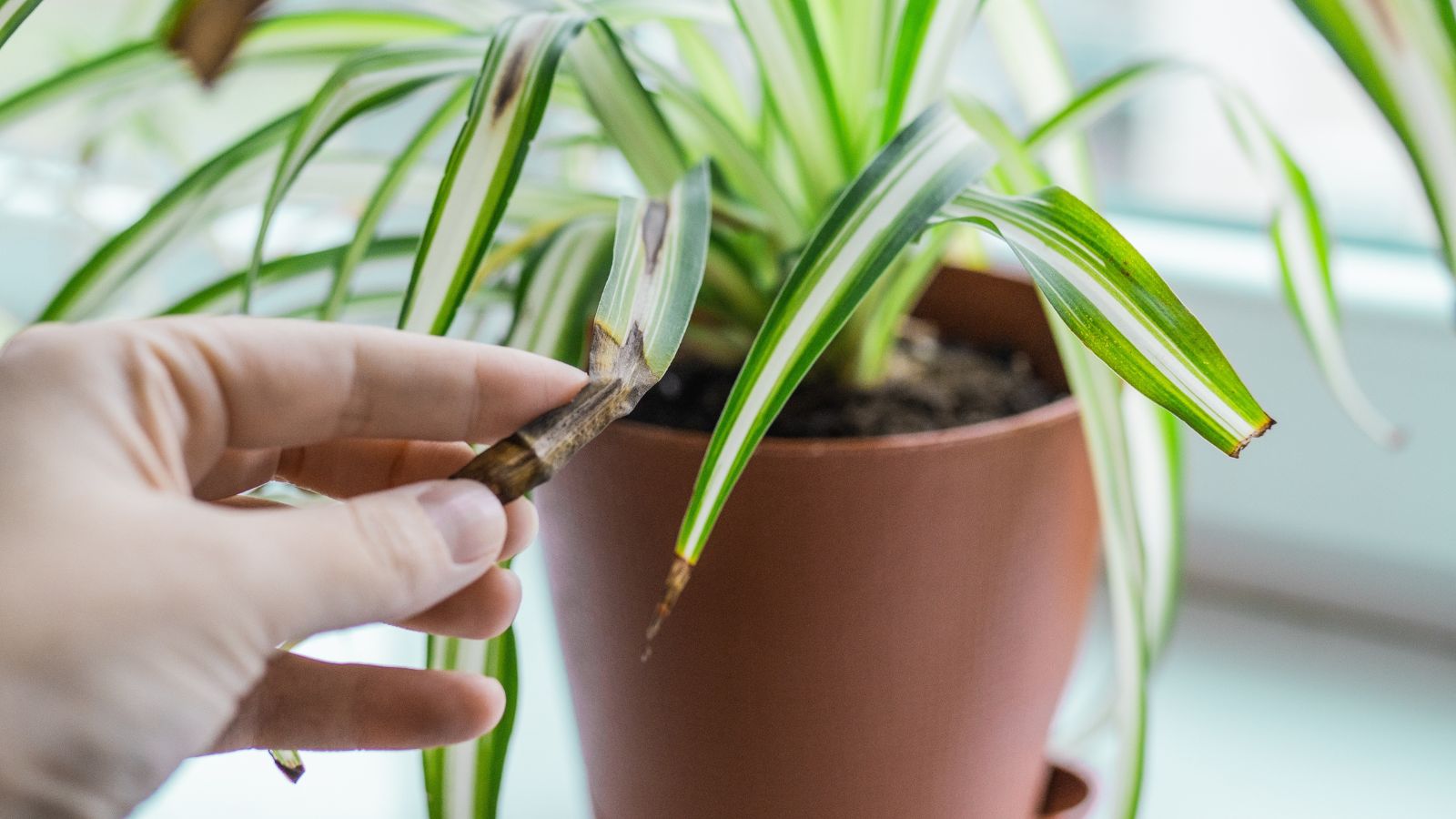
If your spider plant has brown tips and leaves turn black, it is usually a sign of bacterial leaf blight or root rot. Leaf blight often begins as pale spots on the leaf tips that darken to brown and eventually black. Bacterial leaf spot typically develops in overly hot, humid conditions. Root rot leads to leaf collapse and can cause the plant’s base to become soft and mushy.
To stop these diseases from spreading, avoid overhead watering and remove any affected leaves or damaged foliage. If the infection reaches the stems, the plant will not recover and must be discarded to prevent it from spreading to your other houseplants.
Frequently Asked Questions
Should I cut off the brown tips on my spider plant?
You can easily cut the brown tips with sharp scissors without hurting the plant.
How do you fix brown tips on spider plants?
There are multiple reasons plants develop brown tips on your plants, so figure out the cause before trying to solve the problem.
How do you perk up a spider plant?
Give it proper watering, and remediate any pest or disease issues and your spider plant will perk up.
What does an overwatered spider plant look like?
Look for chlorotic, faded leaves that sometimes turn yellow or brown. This is a sign you’re overwatering, and certain plants are highly susceptible to this condition.